
Being trauma-informed goes hand-in-hand with sharing the gospel
By Erica Spivey | Senior Director of Church Mobilization & Training
Walk into almost any church on a Sunday morning and you will find brokenness sitting quietly in the pews.
A grandmother raising her grandchildren because addiction has taken her daughter.
A foster family exhausted and unsure if they can carry on.
A teenager whose smile hides a story no one knows about.
Brokenness isn’t limited to the news or neighborhoods far away. It is present in our small groups and our own families. Sometimes, we miss seeing the brokenness and hurt right in front of us because we misread the signs.
Behavior can reveal hidden hurts
What we observe on the surface—the behaviors—may actually be pointing to someone overwhelmed by grief, fear, disrupted trust, or needs we cannot see. Buried beneath what is easy to characterize as simply bad behavior may be a deep hurt and a longing for hope. We know that true hope comes from the gospel. When church leaders, staff, and those who serve are knowledgeable and equipped to recognize the signs of a child or an adult who is struggling with brokenness, there is an opportunity to show Christlike love and compassion.
Stepping in close, into hard places
This brokenness we see is a reminder that the church cannot stand at a distance. God has entrusted His people with both a calling and a mission: to move toward the vulnerable, make disciples, and embody the hope of the gospel.
James 1:27 describes faithful religion this way—“to visit orphans and widows in their affliction, and to keep oneself unstained from the world.” This charge doesn’t dismiss the important work of public agencies, nonprofits (such as our own Baptist Children’s Homes), or other ministries. It does, however, remind us that the church is God’s “Plan A.”
To care is more than noticing a need from a distance. It is walking alongside people in places marked by loss, instability, isolation, and pain. Jesus repeatedly moved toward those others overlooked—welcoming, listening, restoring dignity, speaking truth, and inviting people into new life. The church follows Him when it enters hard places with both grace and wisdom, offers compassion without abandoning truth, and shares truth in a way that can be received as care rather than condemnation.
Being prepared as a church
Being prepared in the way that produces the right results is so important. In the two marathons I’ve run, the simple desire to complete 26.2 miles didn’t prepare me for race day. A runner needs a plan, repeated practice, nourishment, mental readiness, and support along the course.
In the same way, a church also needs preparation if it is to persevere in its efforts to come alongside those who are hurting in the pews, children’s and student ministries, or those in the community.
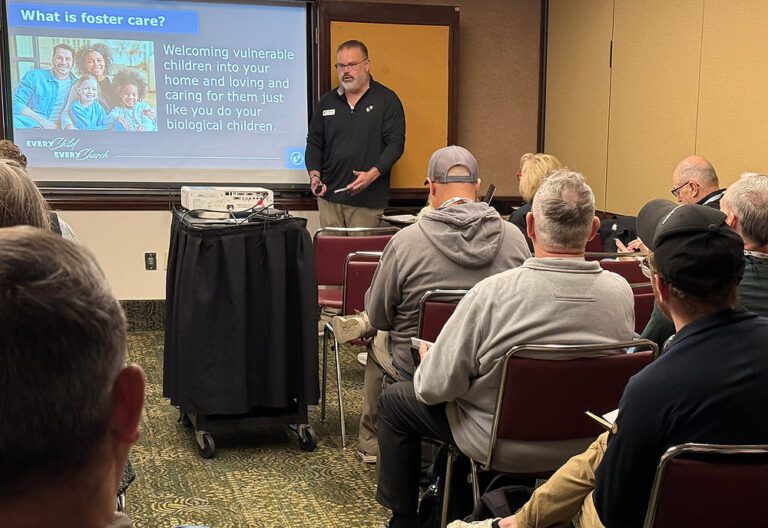
Coming alongside churches to equip leaders, staff, and workers with needed tools and resources is an area at Baptist Children’s Homes (BCH) that God is growing. In much the same way, our cottage parents and foster families are trained so they can best care for the boys and girls they serve daily, BCH has developed a gospel-centered, trauma-informed training called “Seeing Through His Eyes” to equip and train the church.
What being equipped means and what it does not mean
Being equipped helps believers see that behavior often communicates a deeper story. Being a church that is trauma trained does not mean harmful choices are excused.
It also does not mean those who are deeply impacted by the hurts and brokenness in their lives are defined by their trauma. Instead, the goal is to create room to listen well, respond with patience, and remember that every person bears God’s image. (James 1:19, Genesis 1:26)
This matters because brokenness speaks powerful lies about identity: you are alone, you are what happened to you, you will never change, you are unworthy. The goal of BCH’s Seeing Through His Eyes training is to equip church partners with the knowledge and resources so the hurting people you are ministering to learn that their identity is not defined by brokenness. Instead, it shows them how God sees them and loves them unconditionally.
For the sake of the gospel
We know that the Great Commission is the call for us to make disciples (Matthew 28:19-20). Discipleship happens through relationships so people are seen, known, loved, and called to grow. Building that trust, especially with children and others who are navigating hurts and brokenness, is essential for discipling them. And it is not possible for discipleship to happen at a distance.
A church that understands trauma is equipped to step into those relationships to build compassionate trust that leads to gospel conversations. It is about equipping the church so those who are hurting can be pointed to the hope and truth of the gospel.
Where does my church start?
Prayer is always the best place to start:
- Pray for the vulnerable lives of those in your community and even in your pews.
- Pray for God to reveal where your congregation needs to serve.
- Pray for God to lead you as you plan.
- Pray for God to bring the right people together to help serve.
The good news is you do not have to figure all of it out on your own. We have regional Seeing Through His Eyes trainings across North Carolina. If you missed the training in your area, we will be scheduling more in the near future.
We would love to have a conversation with you to learn about your church, answer questions, and how BCH can come alongside you.
For more information and trainings:
bchfamily.org/training
To contact us through the website:
bchfamily.org/sayyes
Email me at espivey@bchfamily.org
What does trauma-informed ministry mean?
Trauma-informed ministry means recognizing that a person’s behavior often communicates an underlying story of grief, fear, or broken trust — and responding with patience and understanding rather than only correction. It does not mean excusing harmful choices, and it does not mean defining someone by what happened to them.
What are signs a child may be struggling with trauma?
Surface behaviors can point to deeper hurt: withdrawal, difficulty trusting adults, unexpected anger, hypervigilance, or trouble forming attachments. What looks like defiance is frequently a child protecting themselves in the only way they have learned.
Does being trauma-informed mean excusing bad behavior?
No. Being trauma trained does not mean harmful choices are excused. It means creating room to listen well, respond with patience, and remember that every person bears God’s image (Genesis 1:26-27), while still holding to truth.
How can my church support foster and adoptive families?
Start by learning what those families actually carry. Trained churches are better able to offer practical support, respite, and steady relationship rather than well-meaning help that misses the mark.
What is Seeing Through His Eyes training?
A gospel-centered, trauma-informed training developed by Baptist Children’s Homes to equip churches with tools to support those impacted by trauma and to create spaces of care and connection. Sessions are held regionally across North Carolina.
How does my church get trained?
- Saturday, September 19 — Providence Church, Raleigh, NC, 10:00 a.m. to 1:30 p.m.
- Saturday, September 19 — Freedom Church, Lincolnton, NC, 8:30 a.m. to Noon
- Saturday, October 3 — Green Street Baptist, High Point, NC, 8:30 a.m. to Noon
If you missed the training in your area, more will be scheduled.
- Trainings and information: bchfamily.org/training
- Contact us: bchfamily.org/sayyes
- Email Erica directly: espivey@bchfamily.org
Bringing children home — to family, to community, and to Christ.