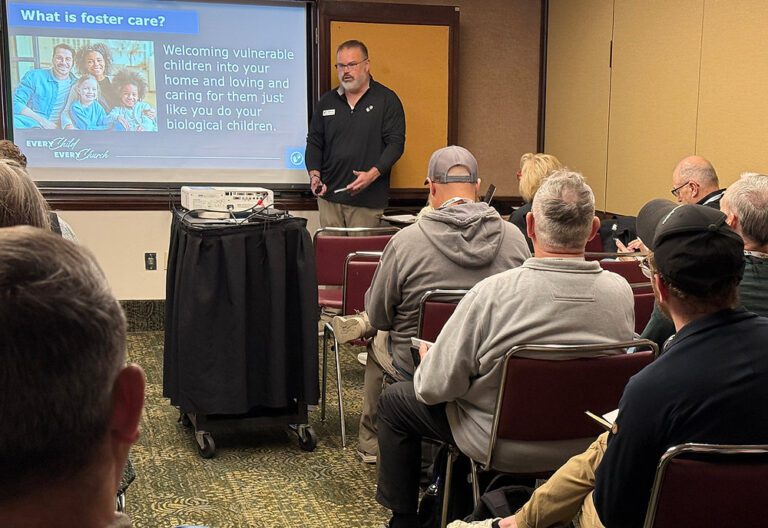

By Bradley Johnson | Pastor & BCH Foster Parent
When my family began our foster care journey there was so much we didn’t know. All we knew was God had put a desire to adopt in our hearts, yet we had little idea of the need for and purpose of foster care.
My wife, Kelly, and I had discussed adoption over the years, but it wasn’t until our children joined us in praying about it that God opened the door. When we sensed the time was right, we reached out to BCH to learn more about adoption and foster care.
Our eyes and hearts were opened
As we sat through the training, BCH opened our eyes and God opened our hearts to foster care. We had no idea what God was preparing to teach us through our fostering journey.
We did not realize the importance of reunification, nor did we fully grasp how emotionally difficult fostering can be for foster parents. We didn’t understand that God would open a door for us to also minister to children’s families and how he would minister through our weaknesses. We didn’t see how He would give us opportunities to share the Gospel with social workers, therapists, doctors, and Guardian Ad Litems. We couldn’t imagine how God would cultivate deep friendships with our case workers and other people connected with each child.
Fostering is hard and rewarding
While fostering is one of the hardest things our family has done, it has also been one of the most rewarding. Anything worth doing is usually hard, and the Lord has taught our family that even though this journey had its heart-wrenching moments, we are closer and better for it. God brought two little boys into our lives, whom we were able to adopt, and we are so blessed that He added them to our family. But we are also grateful for the opportunity to foster other children who have since been reunified with their parents.
Throughout our journey, the Lord has patiently taught us much about foster care, but a few lessons stand out.
God calls normal families to foster
We learned that many people understand the need for fostering and they want to foster, but they do not see how it is possible. Often, the fear of disrupting their own family or the fear of reunification paralyzes them from moving forward to foster.
Most people don’t need statistics or Scripture passages highlighting God’s heart for the vulnerable. They feel the conviction of God’s Word and they see the need. They just don’t understand how it is possible for them to foster.
Therefore, it is important that they see how God calls normal families to minister through foster care. God has used our weaknesses as opportunities to encourage other potential foster parents.
Fostering is not about our desires
Another lesson God has taught us is that fostering is an opportunity for spiritual growth by setting aside your own desires. The primary motive for fostering must be to serve children, instead of wanting children. While we wanted each child in our home, God reminded us that fostering is about serving children and not about our desires.
If your primary motive is filling a void in your life, then the emotionally turbulent journey will crush your dreams. But if you approach fostering with the desire to serve children, then God will teach you how to pray for that child and the child’s parents.
The local church is essential
A third lesson focuses on the value of the local church. Fortunately, our church family has rallied around our family and loved our children. They have babysat, cooked meals, sent cards, prayed for us, cried with us, and celebrated with us when our boys were adopted.
BCH not only trained us, but they encouraged, prayed, and carried us through difficult seasons. When a family is connected to the local church and they partner with Baptist Children’s Homes, they are never alone.
Trust that God will bring the fruit
A final lesson God has taught our family is to trust that the Lord will bring fruit from our labor. Even though we are unable to see any lasting fruit in the moment, we trust our work is not in vain, because He is continuing to work in the lives of children long after they have left our home. The only time a child may hear the gospel clearly is when they are in your home. Like all kingdom work, only the Lord knows the eternal fruit that will come.
Even though the Lord led our family down a path we could never have imagined, we are so grateful for how He has deepened our faith, strengthened us, grown our family, and blessed us with friends.
As Jesus teaches us, “it is more blessed to give than to receive.”
Bradley Johnson serves as senior pastor of Pleasant Ridge Baptist Church, Morganton, NC. The Johnson family has fostered for six years and recently adopted two sons. Both Bradley and his wife, Kelly, are passionate about developing a culture of fostering within the local church.
Watch Bradley and Kelly’s foster story
Listen to Bradley and Kelly Johnson talk about their journey, the need, and how fostering became an opportunity for ministry at go.bchfamily.org/johnsons. You can also read their full story, Fostering reshaped the Johnsons’ view of ministry.
Questions families ask before fostering
Do you have to be a special kind of family to foster?
No. God calls normal families to minister through foster care. Many people already feel the conviction and see the need; what they are missing is seeing how it is possible for a family like theirs. Training, a supportive church and an agency that walks alongside you make it possible.
What should my motivation for fostering be?
The primary motive for fostering should be to serve children and their families, not to fill a void in your own life. Families who step in for the sake of the child are better prepared for the emotional ups and downs, including reunification.
Why is reunification important in foster care?
Reunification is the first goal of foster care because every child deserves the chance to safely return to his or her own family. Foster parents who embrace reunification often find opportunities to encourage and share the love of Christ with a child’s parents.
How can a local church support foster families?
Church members can babysit, cook meals, send cards, pray, and simply show up through hard and joyful seasons. When a foster family is connected to a local church and supported by BCH, they are never alone. Learn how your church can help at bchfamily.org/for-churches.