
By Blake Ragsdale & BCH Communications
When Roydale and Bailey Engel moved to Thomasville, they had no family or friends in the area. They were foster parents who needed a church. A friend’s cousin told them about Rich Fork Baptist Church, where plenty of families were fostering and adopting.
On their first Sunday, a slide in the announcements promoted a support group for foster and adoptive families. Excited, the Engels came back that Wednesday night and were the first people in the room. What they didn’t know was that it was the group’s very first meeting.
“They thought they were coming to this thriving support group,” says Justin Branch, the group’s leader and the church’s worship pastor, with a smile. “In reality, we really didn’t know what we were getting into or what things were going to look like.”
Justin has described their efforts as “building the plane in the air,” meaning the ministry has launched through the new group even as they trust God to lead its next steps.
At one of those first meetings, a Rich Fork group member the Engels had never met offered to get one of their children to an appointment.
“What it showed me was the Lord already knew what this group was going to be,” Justin says. “The Lord was already bringing people to build these connections.”
A simple plan: just start meeting
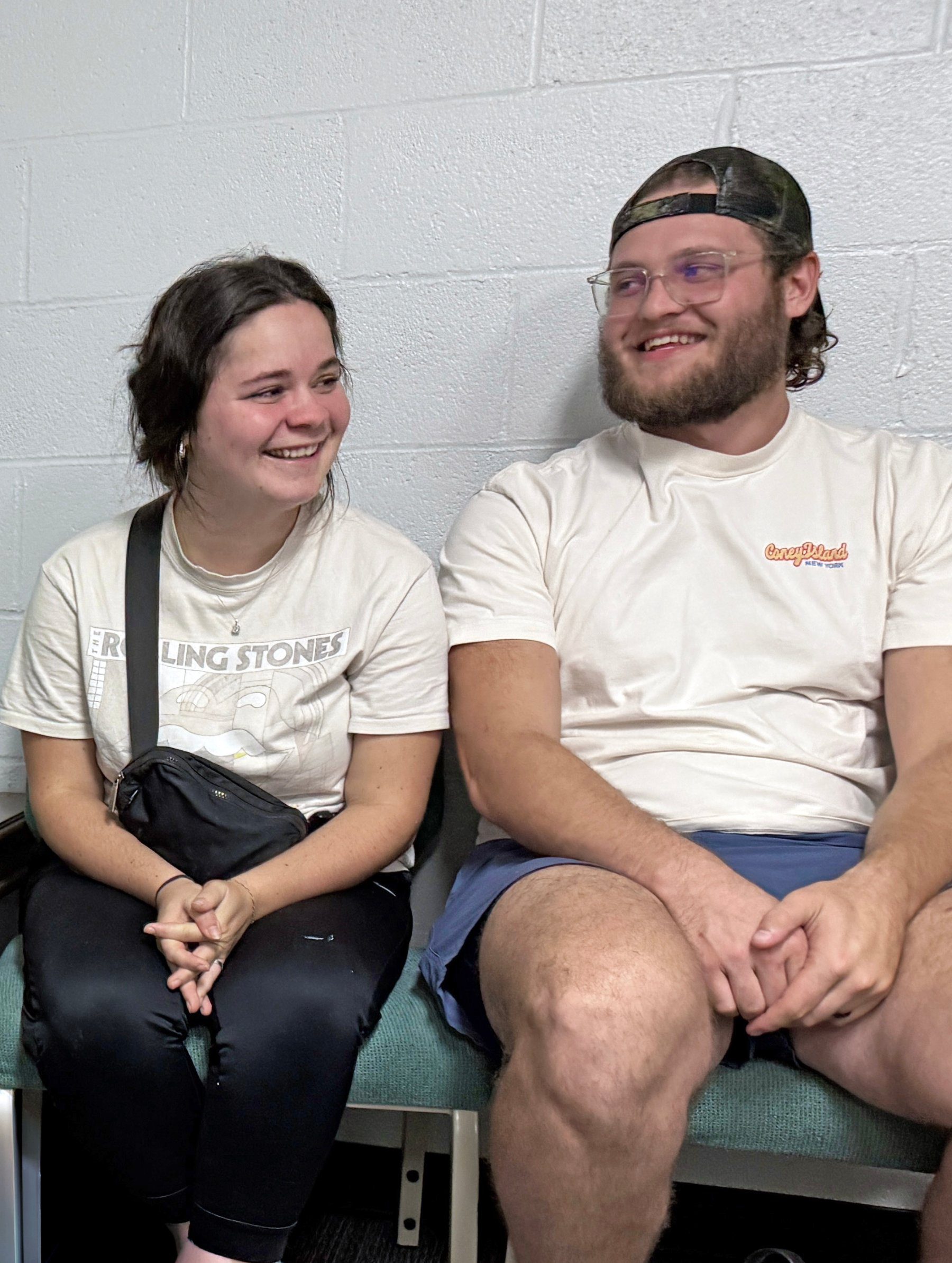
What the Engels believed to be an up-and-running foster and adopt ministry was, in reality, a group of people who made the simplest of decisions: Let’s just start meeting.
Justin and his wife, Jessica, foster through BCH, and the inspiration for the group came at a BCH foster family retreat. “We walked away from that first retreat feeling seen,” Justin says.
The group began meeting on Wednesday nights in the fall of 2025.
“When you think of building a ministry, a lot of times you say, ‘We could do these 10 things,’” Justin explains. “The whole mission of this ministry has been to start small, build relationships, and start with what the Lord’s already done. Then, being obedient to the next step.”
That approach fits the people in the room. Foster parents, he notes, learn to take life one step and one day at a time. “A lot of us don’t have the capacity for much more than that on a lot of days.”
A safe place for heavy things
What takes place on Wednesday nights has become less of a group meeting and looks more like friendship and family.
“It is a group of people who are walking through the same or similar seasons of life,” says BCH foster parent Bailey Bowers (read her column). “Walking through the same things brings a different level of community.”
The group may be the reason Daniel and Jenny Hicks are still fostering at all. Their first placement lasted three months before the child was reunified with family. The goodbye was hard.
“If we wouldn’t have had this group, we wouldn’t have fostered again,” Jenny says. “There’s been many weeks we’ve had very difficult things, and I’ve just came in here and cried. And if it wasn’t for these people saying, ‘This is normal, this is okay, let me help you, let me pray for you,’ we would’ve given up a second time.”
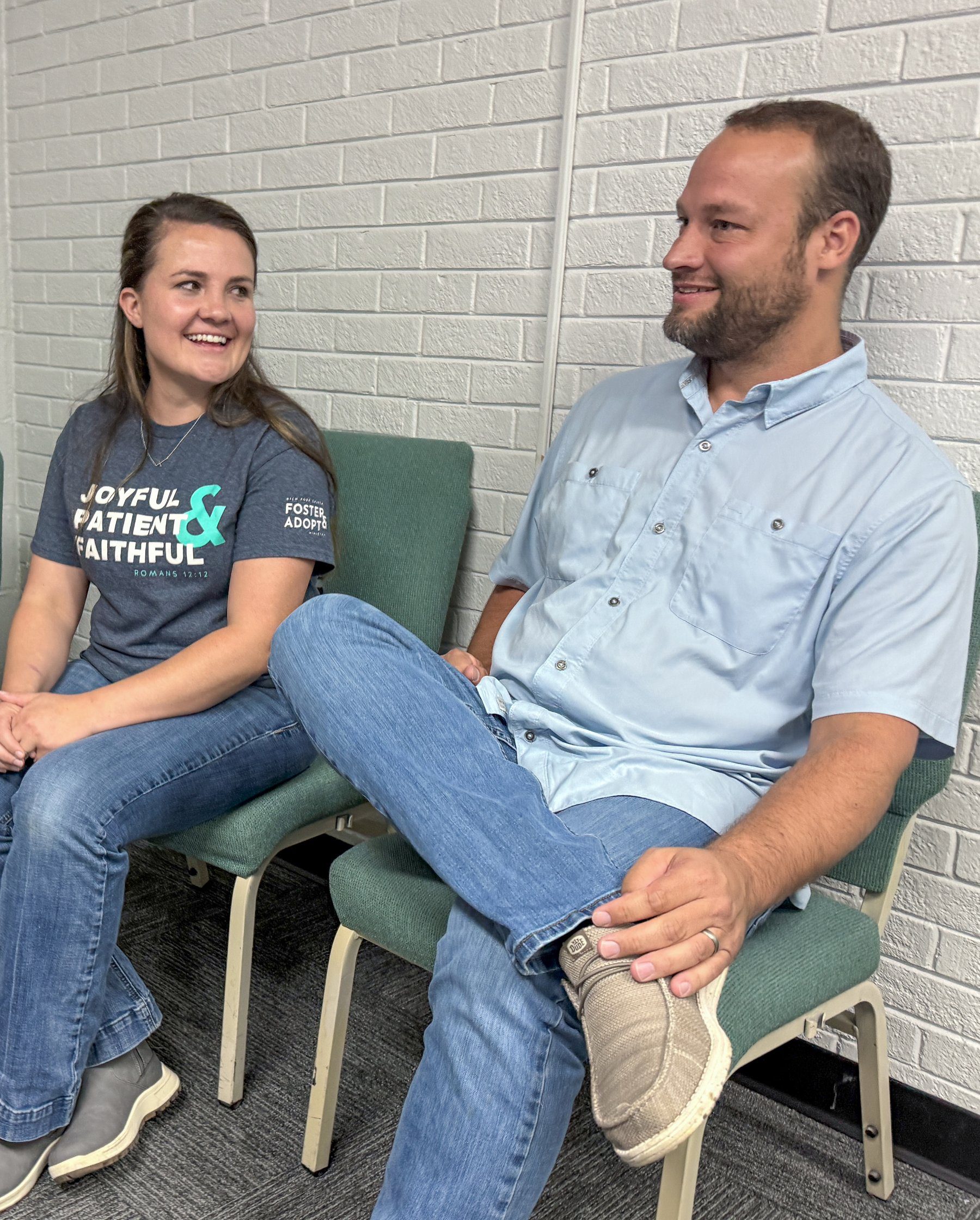
Jesse and Grace Wilson bring a decade of experience to the group. Grace calls it a safe place to be honest about the struggles, whether in a placement, in navigating the foster care system, with behaviors, or in a marriage.
“We’re going to bring you back to the foot of the cross, and we’re going to carry burdens together,” she says. “You can bring the heavy, put it down and walk back out again refreshed.”
Support beyond the room
The support doesn’t stop when the meeting ends. “It’s not just a Wednesday thing,” says Jenny. “We talk on a daily basis. We have a text message group, and we do life together.”
That group text is constantly busy. Members pass along outgrown clothes and car seats. They ask who can come along to a court date or keep the kids during an unexpected appointment. When a family receives a new placement, food and diapers show up at the door. The group has also hosted play days for the kids and a parents’ day out.
Sometimes the help is as simple as dinner. “I can’t fix X, Y, Z that’s going on with your child, but I can take the burden off of dinner by bringing pizza,” Grace says.
Widening the circle of care
Justin is quick to say the group is not meant to be a closed circle. He encourages members to stay involved in other small groups and Sunday School classes, where friends who don’t foster can see God at work in their families.
The group’s events are designed the same way. A parents’ day out gives worn-out couples a break, and it also gives other church members a way to serve. “They get to get the toe in the water of understanding what it’s like to serve a foster family,” Justin says. “Through that, they could say, ‘Maybe God’s calling me to do something like that too.’”
The group is also widening its circle of care. Recently, senior adults at Rich Fork wrote cards of encouragement to local DSS workers. Justin also hopes to see church members trained as guardians ad litems.
The Church is the answer
For Justin, caring for vulnerable children in foster care points back to one solution. “No government agency’s going to fix it,” he says. “This is the work of the Church. The Church is the answer.”
Take a deeper dive
Hear more from members of the Rich Fork group about the impact of their efforts at go.bchfamily.org/richfork.
Questions about starting a foster and adoptive support group
How can a church start a foster and adoptive support group?
Start small and just start meeting. Rich Fork Baptist Church began with a weekly Wednesday night gathering in the fall of 2025, announced on a Sunday slide, and let God lead the next steps. The group’s leader says the mission is to start small, build relationships and start with what the Lord has already done.
What does a church foster care support group do?
It gives foster and adoptive families a safe place to be honest and carry burdens together. At Rich Fork, families meet weekly, stay connected through a group text, share outgrown clothes and car seats, go along to court dates, cover childcare during appointments, bring food and diapers when a new placement arrives, and host play days and a parents’ day out.
Why do foster families need church support?
Families who feel alone are families who get tired. Between 30 and 50 percent of foster families stop within the first year, often citing a lack of support. One Rich Fork couple says they would not have fostered again after a hard goodbye without their support group.
How can church members who do not foster get involved?
Church members can serve at a parents’ day out, bring a meal, give rides, write cards of encouragement to local DSS workers or pray for families by name. These small steps help members understand what it is like to serve a foster family, and some discover God is calling them to do more.
Can BCH help my church support foster and adoptive families?
Yes. BCH’s church catalysts help churches discover the role they are already equipped to play. Take the Church Readiness Assessment or visit bchfamily.org/for-churches to start the conversation.